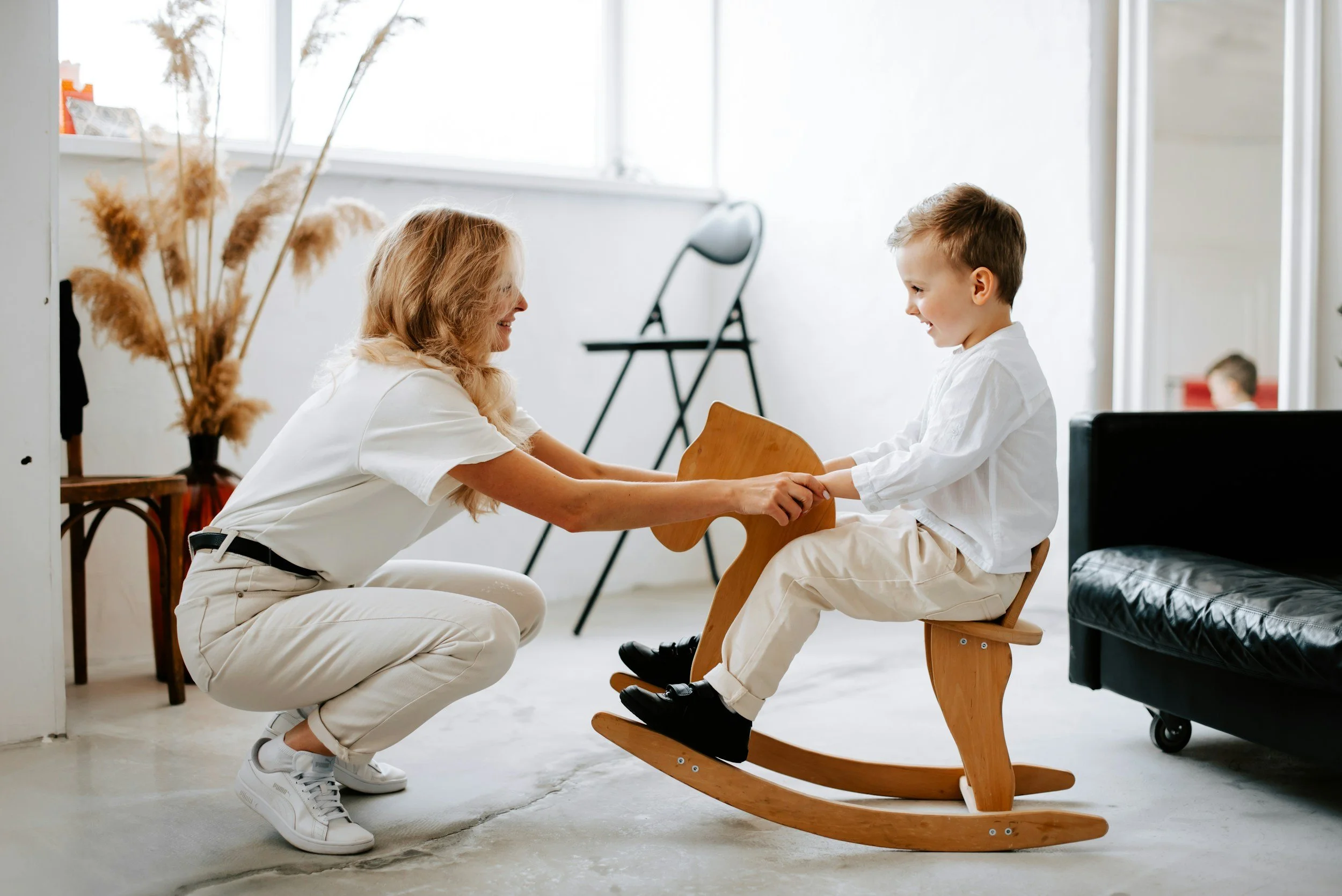
As a parent, you don't need to be a speech pathologist to support your child's speech and language development.
In fact, some of the best opportunities for children to practise communication happen during everyday activities at home. Playing together, reading a book, getting ready in the morning or having dinner can all become opportunities to talk, listen and learn.
If you're wondering how to help child speech development, small changes to the way you communicate with your child can make a meaningful difference.
Here are seven simple strategies you can try at home.
1. Follow Your Child's Interests
One of the easiest ways to encourage communication is to follow what your child is already interested in.
If your child loves cars, animals, dolls, puzzles or drawing, join them in their play and talk about what they're doing.
For example, if your child is playing with a toy car, you might say:
"The car is going fast!"
Or:
"The red car is going up the ramp."
Following your child's interests gives them a reason to listen, respond and communicate because you're talking about something that already has their attention.
You don't need to constantly ask questions. Simply commenting on what your child is doing can create natural opportunities for communication.
2. Talk About What You're Doing
Everyday routines are full of opportunities to support language development.
Talk to your child about what you're doing while you're cooking, getting dressed, packing their bag or going to the shops.
For example:
"We're making breakfast."
"First we put the bread in the toaster."
"Now we're putting on your shoes."
This helps children hear language in context and learn how words are used to describe actions, objects and experiences.
You can also talk about what your child is doing.
If they're building a tower, you might say:
"You've got a big tower."
"Let's put the blue block on top."
These simple conversations can help build vocabulary and understanding over time.
3. Expand on What Your Child Says
When your child says something, you can build on it by adding a little more language.
For example, if your child says:
"Dog."
You could respond:
"Yes, a big dog!"
If they say:
"Car go."
You could say:
"The car is going fast."
This strategy gives your child a model of slightly more advanced language without asking them to repeat it.
The goal isn't to correct everything your child says. Instead, you're showing them how they can add more words and ideas to their communication.
4. Read Books Together
You don't need to read every word on every page to support your child's language development.
Shared book reading can be a wonderful opportunity to talk about pictures, introduce new vocabulary and encourage your child to express their ideas.
You could:
Point to pictures and name them
Talk about what characters are doing
Ask your child what they think might happen next
Encourage them to describe pictures
Talk about how characters might be feeling
Connect the story to things your child has experienced
For younger children, even looking at pictures and talking about them together can provide valuable opportunities for communication.
The most important part is enjoying the book together.
5. Give Your Child Time to Respond
It can be tempting to jump in when your child doesn't answer straight away.
However, children sometimes need extra time to process what they've heard and work out what they want to say.
After asking a question or making a comment, try giving your child a little extra time to respond.
You don't need to repeat the question immediately or answer for them.
A short pause can give your child an opportunity to organise their thoughts and communicate in their own way.
This can be particularly helpful for children who need a little more time to process language.
6. Create Opportunities for Your Child to Communicate
Children don't always need to be directly asked to practise their speech and language.
You can create natural opportunities for communication throughout the day.
For example, rather than immediately giving your child the toy they want, you could pause and give them an opportunity to request it.
You might also offer choices:
"Would you like the apple or the banana?"
Or:
"Do you want the blue cup or the red cup?"
The goal isn't to make your child struggle to communicate. Instead, you're creating natural reasons for them to use their communication skills.
Remember that communication can look different for different children. Gestures, pointing, facial expressions and other forms of communication are also important.
7. Make Communication Fun
Children learn best when they're interested and engaged.
Speech and language practice doesn't need to feel like homework or a formal therapy session.
Play games, sing songs, make silly sounds, build something together or talk about things your child enjoys.
You could play:
Pretend games
Matching games
Turn-taking games
Singing games
Building activities
Simple board games
Imaginative play
These activities can encourage children to listen, take turns, follow instructions, use new words and interact with others.
Most importantly, have fun together.
When communication is connected to something enjoyable, children are more likely to want to participate.
What If You're Still Concerned About Your Child's Speech?
These strategies can help create more opportunities for communication at home, but they aren't a replacement for professional support when a child is experiencing ongoing speech or language difficulties.
If your child is difficult to understand, isn't using words or sentences as expected, struggles to understand language or becomes frustrated when communicating, it may be helpful to speak with a speech pathologist.
A speech pathologist can assess your child's individual communication skills and provide personalised strategies based on their strengths and needs.
What About Speech Therapy at Home?
For families who need additional support, speech therapy can be incorporated into everyday life.
A speech pathologist can show parents how to use communication strategies during activities that are already part of their child's routine.
For families using telehealth, speech therapy activities at home can also become part of online sessions. A child may work with their speech pathologist through a video appointment while a parent or carer supports activities in their familiar home environment.
Depending on your child's needs, child speech therapy online can provide a flexible way to access personalised support without travelling to a clinic.
Supporting Speech and Language Doesn't Have to Be Complicated
You don't need special equipment or hours of structured activities to support your child's communication.
Some of the most valuable opportunities happen naturally throughout the day.
Talk about what you're doing. Follow your child's interests. Read together. Give them time to respond. Add language to what they say. Most importantly, create a positive environment where your child feels comfortable communicating.
Every child develops differently, so what works well for one child may not work in exactly the same way for another.
If you're concerned about your child's speech or language development, a speech pathologist can help you understand your child's individual needs and provide strategies that are right for them.
At VK Speech Pathology, therapy is personalised to each child, with a focus on building communication skills and confidence in ways that are meaningful to the child and their family.
If you'd like support with your child's speech or language development, contact VK Speech Pathology to discuss your concerns and find out how personalised speech pathology support could help.
